


Buddha: Avatar of Wisdom & Compassion in Divine Marga Cosmology

In the vast creation described within Divine Marga cosmology, the Buddha is understood as a God-Man and Avatar—an incarnation who came not merely to teach, but to participate in the transformation of the world’s collective karma. He is revered as a living embodiment of Wisdom and Compassion, whose presence continues to illuminate the path of soul liberation (moksha). Divine Marga is a spiritual path and cosmological framework that integrates the wisdom of various traditions, offering a broader map of spiritual reality for seekers of truth. The Buddha Path is viewed as part of an eternal spiritual lineage that flows from the highest regions of creation, guiding souls beyond the illusions of lower planes toward the Pure Divine Home.
According to Buddhist traditions, this being took birth as Siddhartha Gautama in the 5th–6th century BCE, in Lumbini (present-day Nepal), to royal parents of the Shakya clan. He was raised amidst comfort and protection, shielded from the visible realities of suffering. However, in accordance with the deeper divine purpose of his incarnation, the veils of worldly illusion gradually lifted. Through encounters with old age, sickness, and death, he directly perceived the universal condition of suffering that binds all beings within the cycles of birth and rebirth.
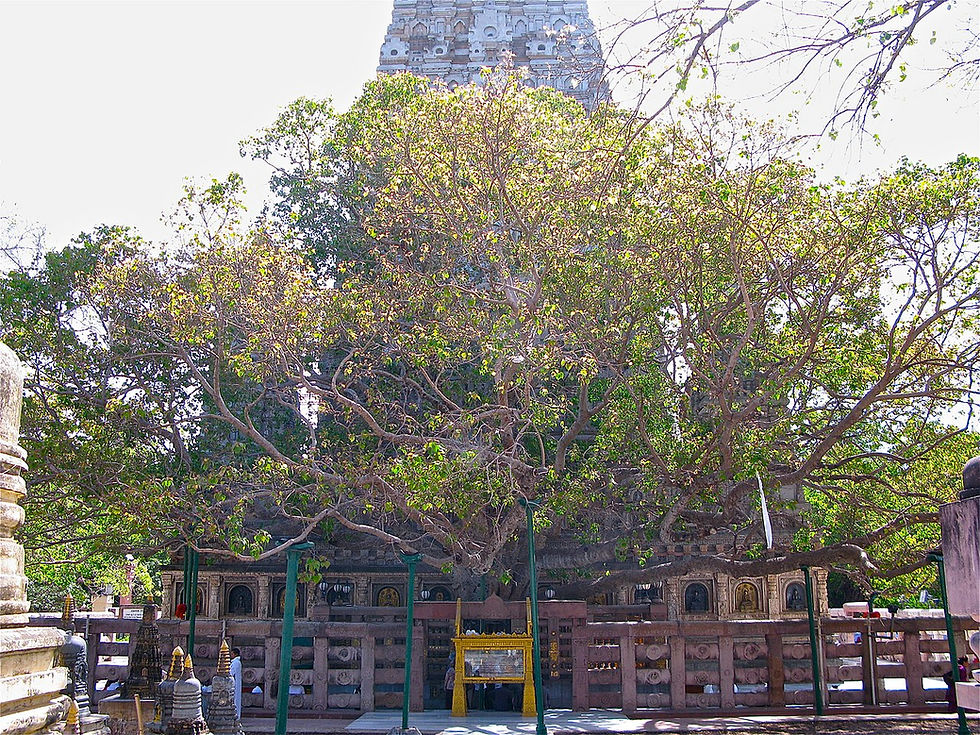
Renunciation and Awakening
At the age of twenty-nine, moved by profound compassion and guided by an inner divine impulse, he renounced royal life to seek liberation—not for himself alone, but as part of his greater cosmic responsibility toward humanity. After years of intense spiritual discipline, asceticism, and meditation, he attained Buddhahood (the state of being a Buddha, or "Awakened One") beneath the Bodhi tree in Bodh Gaya, Bihar, India, where the divine wisdom inherent within his higher being was fully expressed through human consciousness. Following his awakening, the Buddha traveled across the Indo-Gangetic plains, sharing his insights and establishing a monastic community (sangha). He entered Maha-parinibbana (final release from the cycle of samsara) at Kushinagar, Uttar Pradesh, India. The Mahaparinibbana Sutta records the events and significant teachings during the last year of the Buddha’s life.

The Buddha taught a Middle Way between sensual indulgence and severe asceticism, leading to freedom from ignorance, craving, rebirth, and suffering. His core teachings are summarized in the Four Noble Truths and the Noble Eightfold Path, a training of the mind that includes ethical training, kindness toward others, and meditative practices such as sense restraint, mindfulness, and dhyana (meditation proper). What he revealed through these was not merely a philosophical system, but a direct expression of universal law. He taught that suffering arises from craving and that liberation becomes possible through right understanding, right action, and inner discipline. This Middle Way reflects a perfect balance aligned with higher cosmic harmony, guiding beings beyond the extremes of indulgence and denial.
His insights into impermanence, non-self, and dependent origination further unveiled the deeper mechanics of existence within the lower planes. All phenomena arise interdependently, without fixed essence, and dissolve in accordance with universal law. The illusion of separateness gives rise to suffering, while true understanding reveals unity within the flow of existence. In essence, what the Buddha embodied was Buddhic consciousness—the realization of a pure, awakened state of mind that transcends egoic attachment and reveals the interconnectedness of all life.
Transmission of the Dharma
During his earthly lifetime, his teachings were preserved by devoted disciples such as Sariputta, embodying profound wisdom; Moggallana, representing meditative mastery; and Ananda, the faithful transmitter of the Dharma. Through them, the Buddha’s teachings became a living stream, expanding across regions and cultures while retaining their essential clarity.
As these teachings spread, they unfolded into diverse traditions (such as Zen, Tibetan Buddhism, Theravada, Mahayana, and Pure Land Buddhism), each reflecting different aspects of the Buddha’s realization—meditation, devotion, compassion, and philosophical refinement. Within these developments emerged the profound concept of Buddha-fields, sacred realms accessed by enlightened beings and perfectly suited for their continued spiritual activities. These realms, often described as Pure Lands, are free from suffering and filled with conditions that naturally guide souls toward complete liberation.
The Pure Buddha Heavens
As per Divine Marga’s Divine Cosmology, these Pure Lands correspond to ParBrahmanda, representing far higher realities within the grand structure of existence.
Our local universe—known as Brahmanda—forms only a small part of a vast hierarchical creation. Beyond the physical (Pinda), astral (Anda), and causal (Brahmanda) regions, and even beyond the radiant BrahmaJyoti, lies the supra-universal expanse of ParBrahmanda. This realm, encompassing 700 quadrillion universes, is described as a blueprint of perfection—where negative currents cease and the light of Nirguna Brahman shines with unmatched intensity.
It is within this exalted domain that the Buddha Path resides—a realm that resonates with what various traditions describe as Buddha-fields or Pure Lands, as well as other sacred realms across spiritual paths. Within this framework, these are understood not merely as symbolic constructs, but as living reservoirs of enlightened consciousness, established and sustained by the presence of fully awakened beings. In these realms, the teachings of Buddhahood are not merely studied but directly experienced as living transmission.
From this perspective, the Pure Lands described in Buddhist traditions may be understood as reflections or accessible expressions of these higher divine regions, where souls, through grace, devotion, and alignment with the Buddha’s consciousness, can continue their journey toward complete liberation.
In higher esoteric understanding, the transformation that enables this ascent is sometimes expressed through the symbolism of the Five Pure Lights—where the roots of ignorance, anger, and attachment are transmuted into wisdom. This reflects a deeper truth also embodied by the Buddha: that even within delusion lies the potential for enlightenment when illumined by divine awareness.
The Living Buddha Path
From the heights of ParBrahmanda, the Buddha Path continues as a living lineage, expressing his teachings with undiminished power. This lineage is not confined to history but operates as a dynamic current of Grace, transmitted through realized masters (Lamas) and directly accessible to sincere seekers.
In Divine Marga’s framework, Gautama Buddha is recognized among the Masters of the Ancient Wisdom alongside Maitreya, Sanat Kumara, and Jesus the Christ. Through this lineage, Lord Buddha continues to fulfill his cosmic responsibility: participating in the transmutation of collective karma so that souls may ascend more freely.

Wesak: The Living Transmission of Light
The Buddha Path is not just a historical memory; it remains a living, guiding force that operates across the planes of creation. This living connection is especially revealed during the sacred festival of Vesak (Wesak), the holy occasion traditionally understood as commemorating the birth, enlightenment, and passing (Parinirvana) of Gautama Buddha. In deeper spiritual understanding, it also signifies the rebirth of the soul into higher awareness—a renewal of consciousness aligned with the Buddha’s realization. Among these, enlightenment stands as the central radiance, representing the complete awakening of divine Wisdom within human form.
In esoteric traditions, particularly those aligned with the planetary spiritual hierarchy centered at Shamballa, Wesak is regarded as a moment of profound cosmic alignment. At the time of the full moon, it is said that the Buddha manifests in a subtle, luminous form and is received by great beings of Light, including Sanat Kumara and the assembled Masters of Wisdom. In this sacred convergence, a powerful transmission of divine energy—carrying the essence of Wisdom, Compassion, and liberation—is released into the planetary field.
This transmission, associated with the full moon, is understood not merely as symbolic, but as an actual descent of spiritual force, flowing from the highest realms through Shamballa into the planetary hierarchy, and further into the consciousness of receptive souls—a renewal of divine Grace that supports the evolution of all beings. For sincere seekers, this period becomes a rare opportunity for inner attunement. Through meditation and devotion, one may become receptive to this heightened current, participating consciously in the descent of Light.
The Eternal Presence of the Buddha
In Theosophical and Ascended Master teachings, which Divine Marga integrates into its living cosmology, Lord Buddha is revered as an enlightened being in the lineage of Sanat Kumara. Theosophical Society texts describe the Planetary Hierarchy as the inner spiritual government of Earth, centered at Shamballa and headed by Sanat Kumara as the Lord of the World. This great Hierarchy oversees the evolution of humanity and the planet through a structured chain of Masters, Adepts, and cosmic offices, including the Manu (who guides racial evolution), the Mahachohan (who oversees intelligence and civilization), and the World Teacher (who anchors the Christ principle and imparts spiritual teachings to humanity across ages). Lord Buddha held the office of the World Teacher in the Planetary Hierarchy, serving as the supreme channel for divine wisdom and compassion to flow into the human race during earlier cycles. He later passed this role to Jesus the Christ, who now carries the mantle while the Buddha continues his eternal function as a source of enlightened guidance, offering wisdom and compassion that transcends time and space.
In Divine Marga Cosmology, the Buddha is also recognized as an Adi Sat Guru on the 8th Divine Region—an exalted station of primal Sat Guru consciousness that radiates directly from the Highest Pure Divine Source, enabling the seamless transmission of Grace across all lower planes. His Eightfold Path—Right Understanding, Right Aspiration, Right Speech, Right Action, Right Livelihood, Right Effort, Right Mindfulness, and Right Concentration—serves as an awakening of the Buddhic Self within.
The Buddha did not simply point the way to personal nirvana; his incarnation is understood as a profound act of Compassion, involving the transformation of collective karma, much as other divine incarnations have done across ages. This act of supreme Compassion is seen as opening a direct pathway from the lower Brahmanda regions—where souls labor under the dualities of Lord Brahm/Kal Niranjan—through the radiant BrahmaJyoti, and into the pure light of ParBrahmanda. There, in the Pure Buddha heavens, the teachings are not abstract philosophy but living transmissions.
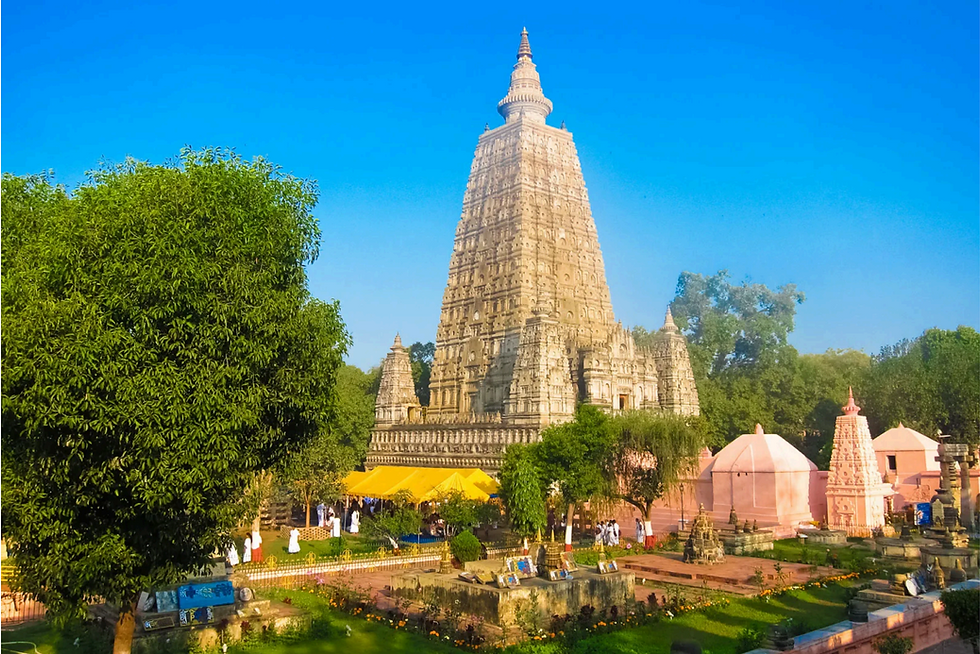
This tradition continues as a guiding presence, anchored in the ParBrahmanda realm, where the Buddha’s Wisdom cuts through delusion (one of the three roots of evil: greed, anger, delusion), while his Compassion dissolves the barriers of separation.
In the present era, the Buddha Path within Divine Marga serves as a living bridge, linking seekers directly to the enlightened consciousness of the Buddha, offering an ongoing transmission of wisdom and compassion. Through the grace of the Sat Guru and the direct current of Divine Light and Sound (Shabd), seekers can receive the same essence that the Buddha embodied. Palden Gyatso, a realized master in the Buddha lineage recognized by Divine Marga, exemplifies this ongoing transmission of Compassion.
The teachings of the Eightfold Path, when practiced with the understanding of Divine Cosmology, become a vehicle not only for personal enlightenment but for planetary service—transmuting personal and collective karma, and contributing to the Buddha’s ongoing work of world redemption. The Buddha, as an embodiment of Wisdom and Compassion, remains a guiding presence within this living cosmology. In the higher realms described in Divine Marga teachings, this lineage is seen as an ongoing invitation: to walk the Middle Way, to transform one’s own karma, and ultimately to realize the Divine Source beyond all creation—the Adi Sat Purush.
For those drawn to this path, Divine Marga offers a framework that seeks to integrate the Buddha’s ancient Dharma with a broader map of spiritual reality—presenting not only a philosophy, but a lived path from suffering to enduring freedom.
Sources:
FAIR USE NOTICE: This site may contain copyrighted material, the use of which has not
always been specifically authorized by the copyright owner. Such material is made available to advance understanding of ecological, political, human rights, economic, democracy, scientific, moral, ethical, and social justice issues, etc. It is believed that this constitutes a 'fair use' of any such copyrighted material as provided for in section 107 of the US Copyright Law. In accordance with Title 17 U.S.C. Section 107, this material is distributed without profit to those who have expressed a prior general interest in receiving similar information for research and educational purposes. For more information, go to: http://www.law.cornell.edu/uscode/17/107.shtml
If you are the copyright owner and believe that this article infringes your copyright, and you would like us to remove this article, please contact us here and we will review your request.


Comments