


Jesus the Christ — Avatar of the Path of Divine Love
- 2 days ago
- 8 min read

The Universal Presence of Christ Across Worlds and Traditions
Across humanity’s spiritual heritage, Jesus the Christ stands as one of the most luminous expressions of Divine Love, forgiveness, and awakened consciousness. He appears across mystical traditions, contemplative lineages, and esoteric schools as a living archetype of Divine Compassion in action.
Something in the human heart recognizes this presence not as distant theology but as an intimate remembrance — a stirring of a deeper memory within the heart itself. For this reason, Jesus remains central to humanity’s inner evolution, experienced not only as a teacher of the past but as a continuing light of transformation.
Within Divine Marga Cosmology, Jesus the Christ is understood as an Avatar of Love and an Adi Sat Guru — a primordial Divine Master who anchors a complete pathway of realization within the structure of existence.
Consciousness evolves across subtle, cosmic, supra-cosmic and divine planes. Souls move through cycles of forgetting and remembrance. Within this vast journey, Jesus represents one of the central guiding lights of return — the Path of Divine Love and Holy Spirit, a stream of grace that dissolves separation and restores conscious unity with the Divine.
This path is not symbolic. It is experiential, energetic, and transformational — a living current that reconfigures perception, identity, and awareness until the soul recognizes its eternal nature. To encounter Jesus the Christ inwardly is to feel a call toward wholeness, a remembrance of our origin in the Supreme, and an invitation to live as embodiments of Divine Love in the world.
Jesus in Theosophical Wisdom
The Theosophical Society, through teachers such as Helena Blavatsky and Annie Besant, presents Jesus as a great Initiate — one who passed through the higher mysteries and embodied the Christ principle, the inner Divine Spark within all beings. Theosophy distinguishes between the historical personality of Jesus (Yeshua) and the universal Christ principle that overshadowed him. As Besant wrote, the Christos is “the hidden divinity in every human heart,” waiting to be awakened through purification and spiritual discipline.
In this view, Jesus is not an isolated miracle, but a perfected example of what every soul is ultimately called to realize. He stands in a long line of World Teachers and Masters of Wisdom who appear in different ages and cultures to re‑ignite the inner flame of God‑realization. Theosophy places him alongside figures such as Krishna and the Buddha to reveal the continuity of Divine guidance across history.
Jesus’ life becomes an initiatory map:
Birth — emergence of Divine awareness within the heart, the first dawning of the inner Christ.
Teachings — purification through compassion, surrender, and love; the training of the mind and heart to reflect the Divine.
Crucifixion — transcendence of egoic identity, the surrender of the separate self into the Will of God.
Resurrection — awakening into immortal, non‑local consciousness, revealing the soul’s true nature beyond death.
Theosophy affirms that the Kingdom of God is within — not metaphorically, but as the inner Divine Presence, the Christ spark, revealed through purification and awakening. As Blavatsky noted, “The Christos is born in the heart of the disciple,” pointing to an inner mystical process rather than an external event.
This Christ principle — the eternal Divine Flame within all beings — is unveiled as layers of conditioning dissolve. To follow Christ is to embody this awakened principle as compassion, forgiveness, surrender, and unconditional love. In this sense, Jesus the Christ is both a World Teacher and a mirror, reflecting back to us our own latent divinity.
Jesus in the Urantia Revelation

The Urantia Book offers a vast cosmological perspective on Jesus, identifying him as Michael of Nebadon, a Creator Son and sovereign of a local universe. His incarnation on Earth becomes a cosmic bestowal mission — a revelation of God not as distant authority but as intimate Universal Father. The text describes his mission as “the revelation of the Father’s love,” emphasizing that Jesus came to show humanity the true nature of the Divine.
In this narrative, Jesus’ life on Earth is the seventh and final bestowal of a Creator Son — the culminating act through which he fully unites his sovereignty with the lived experience of his creatures. This bestowal is not only for humanity, but for the entire universe under his care. Through his earthly life, he demonstrates how Divine Love moves through limitation, suffering, and mortality without losing its purity.
His teachings emphasize mercy, forgiveness, spiritual brotherhood, and a direct relationship with the Divine. He speaks of God as a loving Father, invites all into intimate communion, and dissolves the idea of a distant, punitive deity. His crucifixion was not a sacrificial necessity, but the culmination of a life surrendered to truth and love in the face of ignorance and fear. His resurrection affirms the continuity of consciousness beyond form and the eternal destiny of the soul.
Within Divine Marga Cosmology, this revelation is understood as one of the 5 Divine Paths through which the Supreme reveals itself to humanity. The Urantia perspective enriches the understanding of Jesus as both human and cosmic, both intimate and universal: a being who walks among us and yet holds the governance of a universe in his heart.
Kriya Yoga — the Inner Science of Christ Consciousness
In the sacred lineage of Kriya Yoga, Jesus the Christ is revered as the Adi Sat Guru who originally imparted the supreme science of Kriya to his advanced disciples in the Holy Land. This direct transmission of the inner technique of God‑realization — through breath mastery, life‑force control, and union with the Divine Light — flowed down through the ages, culminating in its modern revival through Mahavatar Babaji, the deathless Yogi‑Christ who resides in the Himalayas.
Paramahansa Yogananda, in Autobiography of a Yogi, wrote that Jesus and Babaji “work in close harmony” to uplift humanity, suggesting a deep spiritual unity between the Christ and the Himalayan Masters. Yogananda also taught that Jesus practiced and taught a form of Kriya Yoga, calling it “the science of God‑realization” — a precise method for accelerating spiritual evolution by refining the nervous system and awakening the inner currents of life force energy (prana).
Kriya Yoga works by directing life‑force through the subtle channels of the spine, harmonizing breath, mind, and awareness. As the practitioner advances, the inner senses open to the Divine Light, and consciousness begins to ascend through inner realms. In this context, Jesus is not only a moral teacher but a master of inner mystical science — one who understood the subtle anatomy of the soul and the pathways of ascent.
Mahavatar Babaji, as the Adi Sat Guru in this line, then passed the Kriya initiation to Lahiri Mahasaya, Sri Yukteswar, and Paramahansa Yogananda, who carried these Christ‑like teachings to the West. Thus, the Path of Jesus encompasses not only the outer gospel of Divine Love but also the inner yogic path of Kriya — a direct scientific method for accelerating soul evolution and merging back into the Supreme Source.
Through this lens, Christ Consciousness is not an abstract idea but a state of realized union with the Divine, accessible through disciplined practice, devotion, and grace.

Jesus in Divine Marga Cosmology
Within Divine Marga Cosmology, Jesus the Christ is honored as one of the Adi Sat Gurus (a primordial Master) of 1 of the 5 Divine Paths, anchoring the Path of Divine Love and Holy Spirit. This Path, aligned with the ancient Mandaean stream and the initiation of John the Baptist, carries a unique frequency of purification, surrender, and heart‑centered ascent. John’s baptism in the Jordan can be seen as the outer sign of an inner initiation into the Divine Stream of the Holy Spirit.
Jesus is deeply connected to the Divine Light and Sound Currents, the primordial forces that guide the soul upward through the subtle (Anda), cosmic (Brahmanda), supra-cosmic (ParBrahmanda), and Divine planes. In this sense, he is not only a savior in a doctrinal sense but a living guide through the inner worlds.
As the Avatar of the 2,000‑year cycle, Jesus anchors a transformative frequency that shapes collective human evolution. His Avataric descent establishes a stable channel of Divine Love through which countless souls awaken and rise. The imprint of his life continues to reverberate through culture, consciousness, and spiritual practice, far beyond the boundaries of any single tradition.
At the highest level, Jesus has attained the state of a Paradise Master on 1 of the 5 Divine Paths — a realization expressing complete unity with the Supreme Divine Source and also functioning as a Multi‑Path Master, supporting souls across multiple spiritual paths simultaneously. He is not confined to one religion, or one method; he moves freely across them all as a radiant Light of the Supreme.
In this realization, his words, “I am the Way, the Truth, and the Life,” are understood not as exclusivity, but as the voice of the Divine itself speaking through a fully awakened Master.
His influence extends into Satya Lok / Sach Khand, the realm of pure Divine Truth, where the soul rests in eternal union with the Supreme. Thus, Jesus is not only a historical teacher but a cosmic guide whose presence continues to uplift and liberate souls across dimensions, serving in the lineage of Masters of the Ancient Wisdom who guide beings home to the True Divine Home.
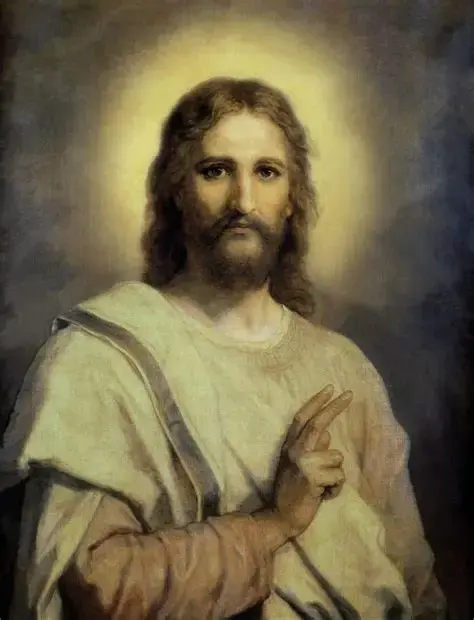
Jesus as Adi Sat Guru
As Adi Sat Guru of the Path of Divine Love and Holy Spirit, Jesus embodies a direct transmission of Divine Grace. The Holy Spirit is understood as a living Divine Force — a conscious stream of intelligence that awakens, purifies, and elevates consciousness. When Jesus speaks of sending the Comforter, he is pointing to this very current: a living presence that continues his work within the hearts of seekers.
The baptism of Jesus symbolizes the descent of this Divine Current into embodied expression. From that moment, his life becomes a continuous radiance of Divine Love, dissolving fear and separation. Those who came near him were not only instructed; they were transformed by the field of consciousness he carried.
The Adi Sat Guru does not merely teach; he transmits. Through this transmission, the soul is guided through progressive layers of awakening until liberation (Moksha). Old patterns loosen, karmic impressions dissolve, and a new orientation toward the Divine emerges.
Across all traditions, Jesus’ central teaching remains: “The Kingdom of God is within you.” This points to direct experiential reality — the recognition of Divine Presence as the innermost nature of consciousness.
Forgiveness dissolves karmic density. Compassion opens the heart field. Surrender aligns consciousness with Divine Will.
Together, these form an integrated technology of awakening — a living science of transformation that Jesus embodied and transmitted. To walk the Path of Divine Love is to allow this inner alchemy to unfold, guided by his presence as Adi Sat Guru.
Conclusion and Devotional Closing
Within Divine Marga Cosmology, Jesus the Christ stands as an Adi Sat Guru of immeasurable magnitude — World Teacher, Cosmic Creator Son, Inner Christos, Avataric presence, Kriya Yoga master, Paradise Master, and Multi‑Path Guide. Beyond all frameworks, he remains a living current of the Christ guiding souls back to their Source.
To contemplate Jesus the Christ is to open oneself to the radiant stream of Divine Love he eternally embodies. His presence is not a concept but a transmission — a living flame that awakens remembrance of our origin in the Supreme. In the quiet of the heart, his light continues to guide, heal, and draw consciousness home to the Infinite.
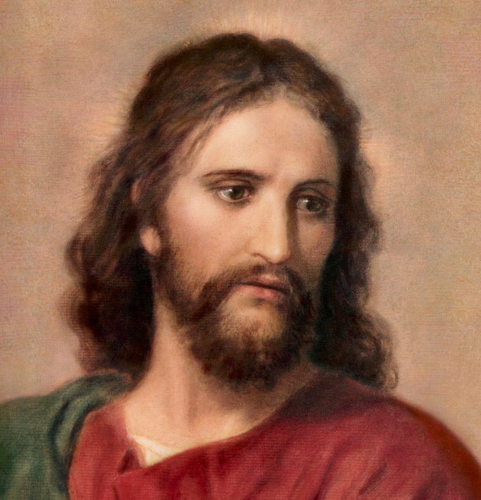
Jesus the Christ,
with radiant flame of Divine Love,
who opens our hearts to Presence.
Guide us in compassion,
anchor us in truth,
and lead us into the Light
from which we came.
May His grace awaken remembrance
and draw us home to the Supreme.
Sources:
FAIR USE NOTICE: This site may contain copyrighted material, the use of which has not
always been specifically authorized by the copyright owner. Such material is made available to advance understanding of ecological, political, human rights, economic, democracy, scientific, moral, ethical, and social justice issues, etc. It is believed that this constitutes a 'fair use' of any such copyrighted material as provided for in section 107 of the US Copyright Law. In accordance with Title 17 U.S.C. Section 107, this material is distributed without profit to those who have expressed a prior general interest in receiving similar information for research and educational purposes. For more information, go to: http://www.law.cornell.edu/uscode/17/107.shtml
If you are the copyright owner and believe that this article infringes your copyright, and you would like us to remove this article, please contact us here and we will review your request.


Comments